



 by
by 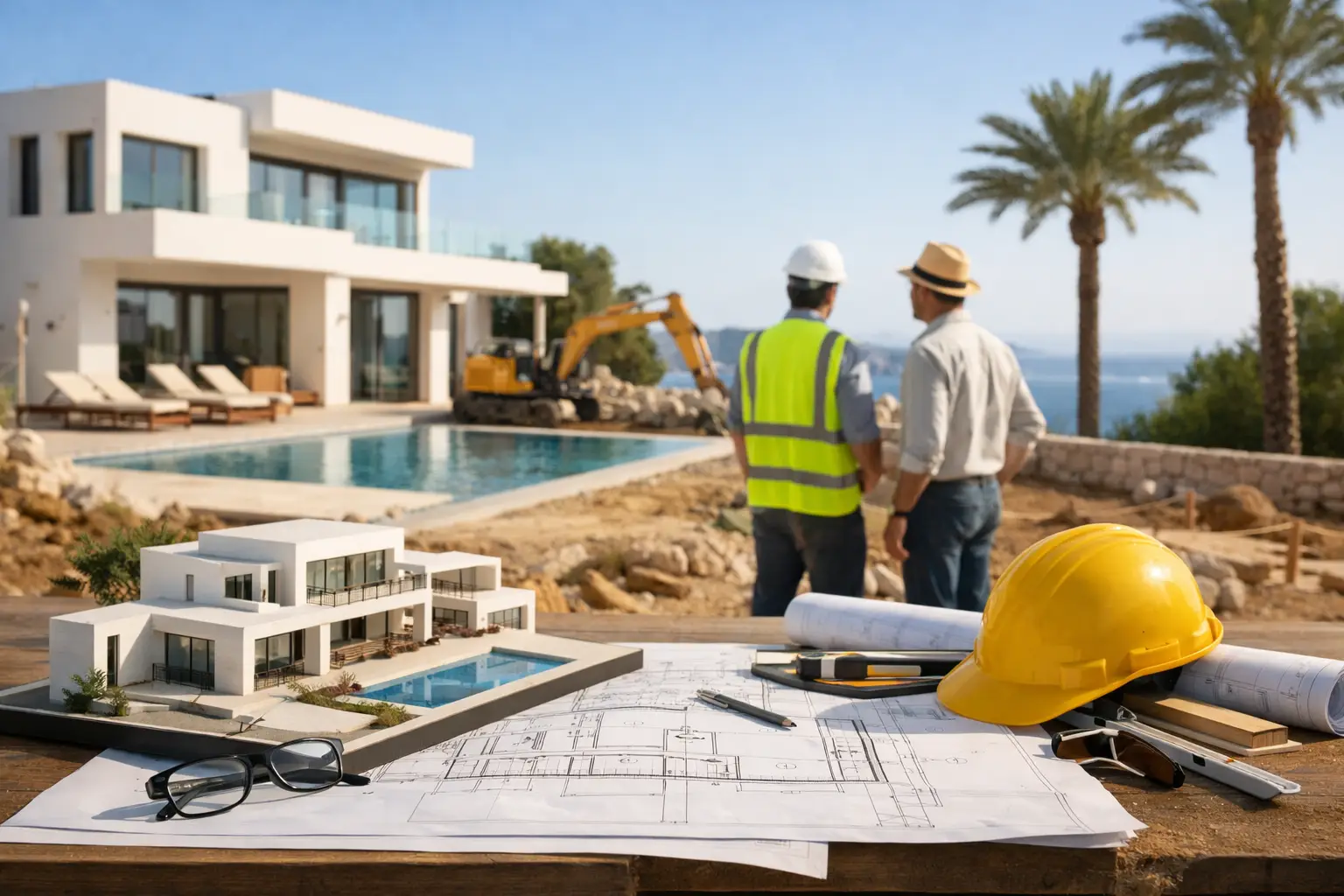
A design and build villa Spain project can look straightforward on paper – buy a plot, approve a design, appoint a builder, collect the keys. In practice, the success of the build depends on decisions made much earlier, often before the land is even reserved. For international buyers, that early stage is where most costly mistakes happen.
Building your own villa in Spain can be an excellent route if you want the right layout, better energy performance and a home shaped around how you actually live. It can also make sense as an investment, especially in established Costa Blanca markets where quality new homes remain in demand. The key is to treat the process as both a property purchase and a development project, with the right checks at each stage.
Why choose a design and build villa in Spain?
For many buyers, the main appeal is control. Instead of compromising on orientation, room sizes, storage, terraces or accessibility, you start with your priorities and design around them. That matters if you are relocating permanently, planning long stays, or creating a second home for several generations of family.
There is also a quality argument. A newly built villa can offer stronger insulation, more efficient glazing, modern climate systems and lower running costs than many resale homes. On the Costa Blanca, where indoor-outdoor living shapes the design of the property, details such as shading, ventilation and sun exposure affect comfort as much as appearance.
That said, building is not automatically cheaper than buying an existing villa. It depends on the plot price, the municipality, construction quality, retaining walls, access, and the complexity of the design. If your priority is speed, a ready property may suit you better. If your priority is fit, performance and long-term value, a build project often becomes more attractive.
Start with the plot, not the house
One of the most common errors is falling in love with a concept before understanding what can legally be built on the land. Not every plot supports the same footprint, height, basement, pool position or boundary distances. Urban planning rules vary by municipality, and small differences in regulation can change the whole project.
Before moving forward, you need clarity on classification, buildability, access, utility connections and topography. A flat plot may reduce construction complexity, while a sloping plot can produce far better views but bring higher structural and retaining costs. Neither is better in every case. It depends on your budget and priorities.
In areas such as Moraira, Javea, Benissa, Calpe and Altea, plot scarcity and planning restrictions can have a direct impact on what is feasible. A sea-view plot may justify a higher budget, but buyers should assess the total development cost rather than the land price alone. Ground conditions, excavation requirements and drainage can alter the numbers quickly.
The design and build villa Spain process step by step
The process usually begins with defining the brief. This means more than choosing the number of bedrooms. You should decide how you intend to use the property, whether you need year-round living comfort, how much maintenance you want, and whether resale value is a major consideration.
Once a suitable plot is identified, the legal and technical checks come first. These normally include ownership verification, planning review, boundary review and an initial assessment of whether the intended project aligns with local regulations. This stage is not the place to rush.
After that, the design phase starts with concept drawings and preliminary layouts. Good design in Spain is not only about appearance. It should respond to the site, the sun, prevailing wind, privacy from neighbours and how outdoor space connects to the main living areas. A villa that looks impressive in renderings can still perform poorly if the orientation is wrong.
When the project design is agreed, the architect prepares the technical documentation for licence application. Only once the relevant permissions are in place should construction begin. Timings vary by municipality, and this is one of the reasons buyers need realistic expectations from the start.
During construction, clear coordination matters as much as build quality. Materials, technical specifications, stage payments, site supervision and reporting should all be defined in advance. If you live abroad, regular updates and one point of contact make a major difference.
Budgeting beyond the build cost
When clients first consider a custom villa, they often focus on the contractor’s price per square metre. That figure is useful, but it is only one part of the budget. The full project cost usually includes the plot, taxes, legal fees, architect and technical consultants, licence fees, utility connections, landscaping, pool works, access improvements and interior finishes.
There can also be hidden pressures. A dramatic plot may need more excavation. A strict planning area may require design adjustments. Imported finishes may increase lead times and transport costs. If the villa includes advanced home systems, lift access or extensive glazing, that will affect both construction and maintenance.
A sensible budget includes contingency. Not because problems are guaranteed, but because build projects involve moving parts. A controlled contingency gives you room to make better decisions rather than forced compromises later.
What makes a villa work well in Spain
A successful villa in Spain is usually more restrained and practical than buyers first imagine. The best homes are designed around climate, ease of living and durability. Large windows are attractive, but they need correct orientation and shading. Open-plan living works well, but storage, utility space and technical rooms still matter.
If the property will be used through different seasons, insulation and climate control deserve real attention. Summer comfort is obvious, but winter sun, heating efficiency and condensation control are just as relevant for permanent residents and long-stay owners.
Outdoor planning should be treated as part of the house, not an afterthought. Covered terraces, pool privacy, outdoor kitchens and easy movement between inside and outside all affect how often the home is enjoyed. This is particularly important in premium coastal locations where lifestyle value supports long-term resale appeal.
Choosing the right team
For international clients, the team around the project is often more important than the project itself. You need people who understand local planning, communicate clearly and can explain each stage without jargon. That includes the property adviser, architect, legal representative and builder.
A design and build villa Spain project works best when responsibility is clear from the beginning. Who is checking the plot? Who is managing the licence process? Who monitors the build? Who confirms that stage payments match progress on site? If these roles are vague, delays and misunderstandings become more likely.
Experience in the local area also matters. Municipal procedures, market pricing and construction practicalities are not identical across the Costa Blanca. A team with proven local knowledge can often spot issues earlier, whether that is access, drainage, neighbour impact or resale positioning.
Build for yourself, but keep resale in mind
Even if you plan to stay for many years, it is wise to think about future marketability. Highly personalised features can be enjoyable, but some choices narrow your buyer pool later. Extreme layouts, excessive maintenance requirements or unusual room planning can weaken resale demand.
This does not mean designing a bland house. It means balancing personal preference with broad appeal. Good proportions, natural light, practical bedroom layouts, decent parking and strong outdoor living areas remain consistently attractive to future buyers.
If investment is part of the objective, ask early how the finished villa will sit within the local market. A well-built property in the right location can perform strongly, but overbuilding for the area or choosing a difficult plot can limit upside.
Common delays and how to reduce them
Most delays in villa projects come from one of three points – unclear planning assumptions, incomplete budgeting, or changes made too late. Buyers often underestimate how long approvals can take, especially if documents need revision or municipal feedback requires amendments.
Another frequent issue is making specification decisions after the build has already started. Structural changes, revised layouts and late material selections can affect both timing and cost. The more decisions that are resolved before construction, the more stable the programme tends to be.
This is where a guided approach helps. At Casas Real, much of the value in supporting build clients lies in keeping the process realistic from the start, so expectations, costs and site potential are aligned before major commitments are made.
Building a villa in Spain is rarely the fastest route to ownership, but it can be the most satisfying one when handled properly. If you start with the right plot, ask the right questions and build with a clear plan, you give yourself the best chance of creating a home that fits both your life and the market around it.
Join The Discussion