



 by
by 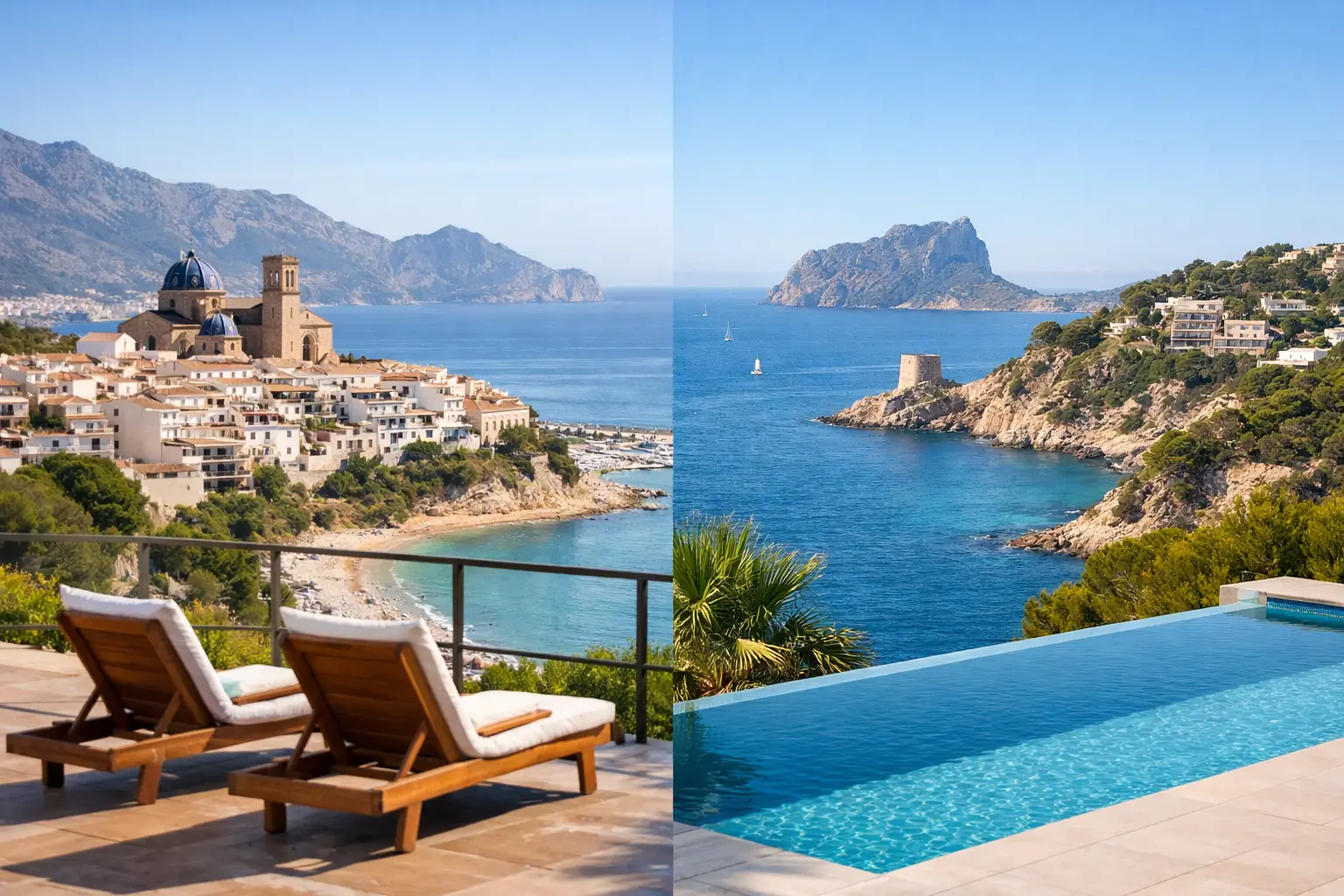
Choosing between Altea or Moraira property usually comes down to one question: do you want a place with more town character and wider stock, or a smaller, more exclusive market with a calmer rhythm? Both locations sit in the premium end of the Costa Blanca market, both attract international buyers, and both can work well for lifestyle purchase and long-term value. The right choice depends less on which town is “better” and more on how you plan to live, use or hold the property.
For many buyers, the decision is not made on a spreadsheet alone. It is shaped by daily routine. The type of promenade you want to walk, how quickly you want to reach services, whether you prefer a historic centre or a polished resort feel, and how much flexibility you need in budget all matter. That is why comparing these two locations properly is more useful than looking at headline prices in isolation.
Altea or Moraira property: the key difference
Altea and Moraira appeal to similar buyers, but they offer a different experience on the ground. Altea feels more layered. It has an old town, a working residential community, established neighbourhoods, a marina setting and a broader spread of properties from flats to high-end villas. Moraira is more compact and more boutique in feel. Buyers often choose it for its low-rise character, well-kept surroundings and strong reputation as an upmarket coastal destination.
If you want more choice across price bands and property styles, Altea usually gives you more room to compare. If you are looking for a tighter market with a strong lifestyle identity and limited supply in prime areas, Moraira often stands out.
Neither is a universal winner. Buyers looking for a lock-up-and-leave flat near services may lean one way, while those seeking a private villa in a quiet, high-demand location may lean the other.
Lifestyle and setting
Altea is often chosen by buyers who want visual charm combined with practical day-to-day living. The old town gives it real identity, while the coastline and surrounding residential zones offer variety. Some areas are walkable and lively year-round, while others are more elevated and residential, with sea views and a greater sense of privacy. This mix attracts second-home buyers, full-time residents and investors who want access to different types of demand.
Moraira tends to attract buyers who place a high value on atmosphere and consistency. It is smaller, more contained and generally quieter in tone. That does not mean isolated. It means curated. Many clients like Moraira because it feels established without becoming overbuilt. The centre, beaches, marina and nearby villa areas combine into a lifestyle that is easy to understand from the first viewing.
For relocation buyers, this distinction matters. Altea can offer more of a town-plus-residential network. Moraira often feels more like a premium coastal enclave with strong appeal for those seeking calm and simplicity.
Property types and what your budget buys
One of the clearest differences between Altea or Moraira property is the range of stock. Altea generally offers more diversity. You may find seafront flats, town-centre homes, modern developments, traditional villas and larger hillside properties with panoramic views. That broader supply can be useful for buyers still refining their brief.
Moraira is more villa-led in many sought-after areas, although there are also flats and townhouses. Prime stock is often tightly held. As a result, buyers may face stronger competition for well-located homes that combine privacy, outdoor space and walking distance to the centre or coast.
In simple terms, Altea can suit buyers who want options. Moraira can suit buyers who know the exact setting they want and are prepared to act when the right property appears.
Budget also behaves differently in each market. In Altea, the spread between entry-level and premium can be wide, especially across different neighbourhoods. In Moraira, pricing often reflects scarcity and reputation, particularly in established residential zones. That does not mean Moraira is always more expensive in every category, but it does mean buyers should expect less flexibility in the best positions.
Flats, villas and new builds
If your search starts with a flat, Altea often deserves close attention because the market is typically deeper. This can help buyers who want lower maintenance, a holiday base or a rental-friendly format near amenities.
If your focus is a detached villa, both locations can perform well, but the details matter. In Moraira, many buyers prioritise plot quality, privacy and proximity to the centre. In Altea, views and elevation often become stronger parts of the conversation. New builds exist in both markets, though supply, specification and plot position vary considerably from one micro-area to another.
Investment outlook and rental potential
Investors usually ask whether Altea or Moraira property offers stronger returns. The honest answer is that it depends on strategy. If your priority is broad buyer appeal and a wider resale market, Altea’s diversity can be an advantage. If your priority is holding a premium asset in a market with enduring international demand and limited prime stock, Moraira can be compelling.
Rental potential also depends on property type, licence position, seasonality and management approach. A centrally located flat in Altea may appeal to holiday users who want convenience and lower running costs. A well-presented villa in Moraira may attract families or higher-spend seasonal renters looking for privacy and a polished setting.
Yield should never be judged on headline weekly rates alone. You need to factor in occupancy, maintenance, community fees where relevant, pool and garden costs, and how owner usage affects availability. For some buyers, the best investment is not the highest theoretical return but the property that remains easy to enjoy, easy to maintain and easy to resell.
Practical considerations for international buyers
Overseas buyers often focus first on the view and the location, then discover that the practical side is what protects the purchase. This is particularly true in premium coastal markets where legal checks, planning position, renovation scope and financing structure can materially affect value.
With Altea or Moraira property, it is sensible to assess more than the asking price. Check the exact urban classification, the status of any extensions or terraces, community obligations, access, orientation and future resale appeal. In hillside areas, road approach and parking can make a bigger difference than buyers expect. In central areas, noise, short walking distances and service access become more important.
Buyers planning refurbishment should also be realistic about timing and cost. A property that looks attractively priced may need a higher level of modernisation than the photographs suggest. Equally, a home with a stronger asking price may represent better value if the paperwork is clear and the condition allows immediate use.
This is where experienced local guidance makes the process more secure. A professional agency can help compare not just listings, but also the quality of each opportunity in context – something that matters even more when you are purchasing from abroad.
Which buyer tends to prefer Altea?
Altea often suits buyers who want variety, architectural character and a choice between town life and elevated residential areas. It can work particularly well for clients looking at flats, buyers who want year-round services nearby, and those who like having a wider selection before making a decision.
It is also a strong option for buyers who do not want to be forced into one property format. You might begin the search thinking about a villa and then realise a large sea-view flat better matches your travel pattern and maintenance preferences. Altea gives more scope for that kind of adjustment.
Which buyer tends to prefer Moraira?
Moraira often suits buyers who want a quieter, more exclusive coastal setting with a clear lifestyle identity. It tends to appeal to those looking for a villa-led market, established residential areas and a strong premium feel without high-rise development.
It can be especially attractive for second-home owners and retirees who value ease, image and stability. Buyers who already know they want a low-density, high-demand location are often willing to accept a narrower choice in exchange for that environment.
A better way to decide between Altea or Moraira property
The most effective way to choose is to narrow your priorities before you narrow the map. Decide what matters most: walkability, sea views, privacy, year-round living, rental use, budget stretch, or future resale. Once those points are clear, the right location often becomes obvious.
If two properties seem equally attractive, compare the life they would give you in January as well as in August. Think about upkeep, travel routine, storage, guests, local services and how often you expect to use the home. The better purchase is usually the one that fits your real habits, not the one that simply photographs best.
For buyers weighing Altea against Moraira, there is no need to force a quick answer. These are both strong markets with distinct advantages. A careful comparison, backed by local advice and clear due diligence, will usually show which one matches your plans more closely.
The right property should feel good on the viewing day, but it should also make sense six months later when the paperwork is complete, the keys are in your hand and daily life has begun.



Join The Discussion