



 by
by 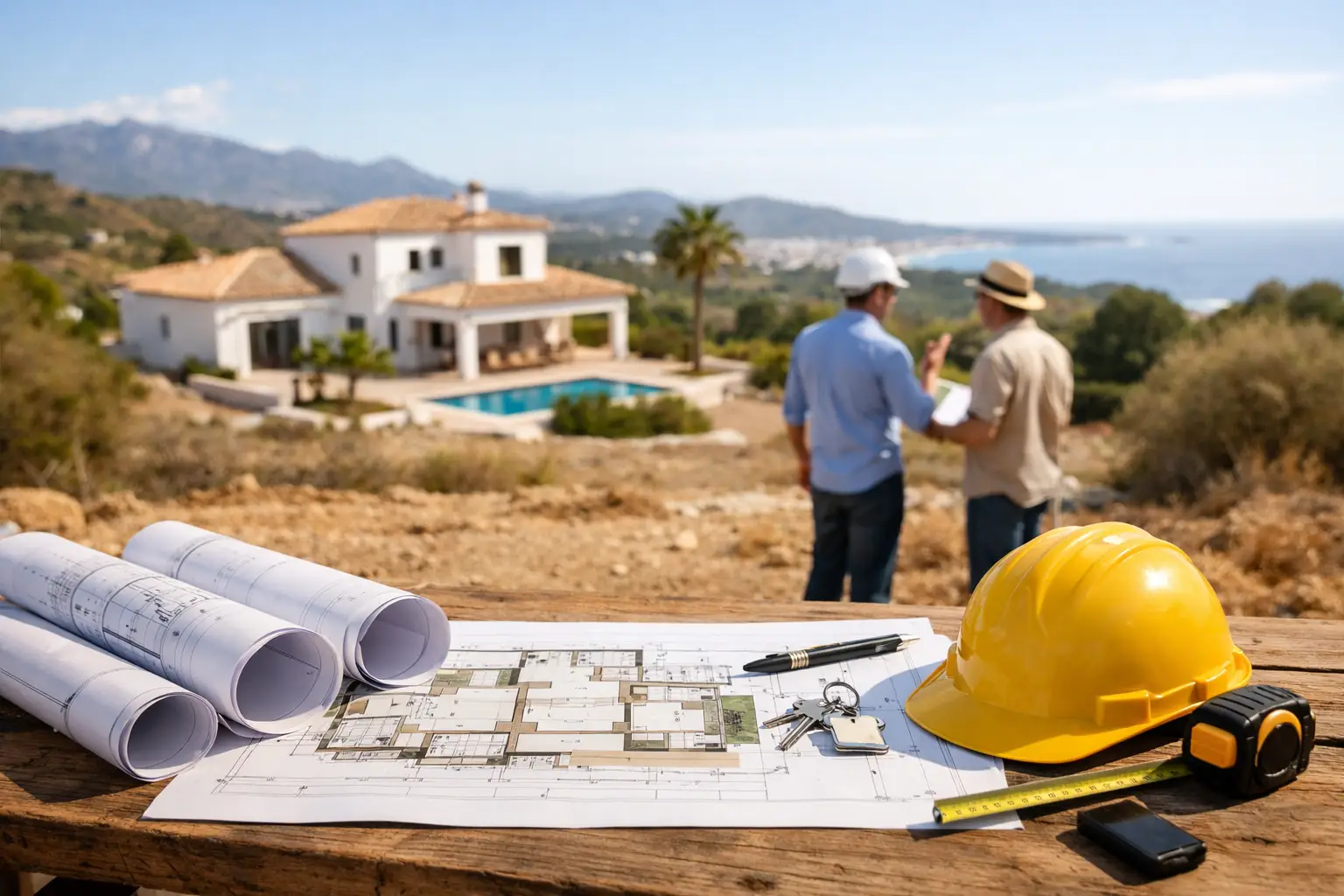
Buying a plot with sea views can feel like the hard part. In practice, the bigger question is whether you can actually build villa on Spanish plot under the planning rules, budget and timeline you have in mind. A parcel that looks perfect on first visit may come with limits on build size, access, utilities or design, and those details shape the whole project.
For international buyers, this is where early due diligence matters most. The right plot can lead to a smooth custom build and a strong long-term investment. The wrong one can mean redesigns, delays and avoidable costs before the first foundation is poured.
Can you build a villa on a Spanish plot?
The answer is often yes, but only if the land classification and urban planning rules support residential construction. In Spain, not every plot advertised for sale is automatically suitable for a villa. Some land is urban, some is developable, and some is protected or rural with strict limits. The legal status of the plot matters more than the seller’s description.
Urban land is usually the most straightforward option for a private villa. It is more likely to have the right zoning, road access and connections for water and electricity, although even then the planning rules can vary widely by municipality. A larger rural plot may seem attractive if you want privacy, but the restrictions can be much tighter and the permission route less predictable.
This is why buyers should never judge a plot by size, views or price alone. Before moving forward, you need to confirm what can be built, how much can be built and what approvals are required.
The key checks before you buy a plot
The first essential check is the planning classification. Your architect or legal adviser should verify the municipal planning rules for that specific parcel, not just for the area in general. This includes permitted use, maximum buildability, occupation percentage, boundary setbacks and height limits. A plot may allow a villa, but not the villa you have in mind.
The second check is title and registration. You want to confirm that the owner has clear title, that the plot boundaries match the registry and cadastral records, and that there are no unresolved charges, rights of way or legal disputes. Boundary discrepancies are not rare, especially on older plots, and they can affect design or future resale.
The third check is infrastructure. Some plots already have direct access to mains water, electricity, sewage and proper road access. Others need additional works or contributions, which can significantly change the budget. A cheaper plot can quickly become an expensive one if utility connections are far away or if retaining walls and ground works are needed.
Ground conditions also deserve attention. Slope, soil quality and drainage have a direct impact on engineering and construction cost. A dramatic hillside plot can deliver excellent views, but it often requires more complex foundations, terracing and retaining structures. That does not make it a poor choice. It simply means the land price and build cost must be assessed together.
Planning rules and local variation
One reason many overseas buyers feel uncertain is that planning rules are local. The same villa concept may be possible on one plot and impossible on another a few kilometres away. Municipalities apply their own planning frameworks, and coastal areas often have extra considerations linked to landscape, infrastructure and environmental controls.
In markets such as Moraira, Javea, Calpe or Benissa, plot demand is strong and well-located land is limited. That can create pressure to move quickly, but planning verification should still come first. Premium locations often come with stricter design and building parameters, particularly where topography, drainage or visual impact are factors.
This is where local knowledge helps. A buyer who understands not just the rules on paper but also how the local town hall and technical process work will usually make better decisions earlier. That can save months later on.
Budgeting to build villa on Spanish plot
Land price is only one part of the investment. To build villa on Spanish plot properly, buyers should budget for the full development picture: plot acquisition costs, architect and technical team fees, licence fees and taxes, legal support, utility connections, site preparation, construction, landscaping and contingency.
Contingency is especially important. Even a well-managed project can change as surveys, engineering and municipal reviews progress. Sometimes the plot needs more retaining work than expected. Sometimes utility providers require extra works. Sometimes a design adjustment is needed to comply with setbacks or buildability ratios. A sensible contingency protects the project from becoming stressful.
Build cost also depends heavily on specification. A clean contemporary villa with quality finishes can vary widely in price depending on glazing, structural complexity, basement works, pool design, home automation and energy systems. It is better to align design ambitions with a realistic construction budget early, rather than redesign halfway through.
Choosing the right team
A successful build starts with the right advisers before it starts with the right builder. At minimum, buyers should have an independent lawyer, an architect familiar with the municipality and a reliable construction professional involved at the right stage. For many international clients, a property adviser coordinating the process adds real value because it keeps decisions aligned from plot search through to completion.
The architect does more than draw plans. They assess what is viable on the site, develop a compliant design, prepare documents for licence applications and coordinate technical requirements. If the plot is challenging, their input should come before purchase wherever possible.
The builder should be selected carefully and compared on more than headline price. A low quote may exclude important elements or rely on assumptions that change later. Detailed specifications, staged payments and clear contractual terms matter. So does communication. For overseas owners, updates, documentation and practical coordination are just as important as workmanship.
The licence process and timeline
Many buyers ask how long the process takes. The honest answer is that it depends on the municipality, the complexity of the plot and how prepared the documentation is. There is no universal timeline that fits every project.
Typically, the sequence includes plot due diligence, concept design, technical project preparation, submission for building licence, municipal review and then construction. If the plot is straightforward and the team is experienced, the process can move efficiently. If there are planning queries, infrastructure issues or design revisions, it will take longer.
This is why patience and preparation are better than rushing. Buying land first and asking questions later can turn a promising project into an expensive delay. Doing the technical and legal checks up front usually leads to faster progress overall.
New build versus buying an existing villa
For some buyers, building is the right route because they want control over layout, energy performance, materials and long-term maintenance. A new villa can be tailored to modern living, and in many cases it offers stronger efficiency and lower upkeep than an older home requiring refurbishment.
That said, building is not always the best answer. If timing is critical, or if you prefer a simpler path, an existing villa may be more practical. Development involves decisions, approvals and project management. Some clients enjoy that process. Others would rather avoid it. The right choice depends on your timeframe, appetite for involvement and investment strategy.
Common mistakes buyers can avoid
The most common mistake is falling in love with a plot before checking what can be built. The second is underestimating total cost by focusing too heavily on land price. The third is relying on informal assurances instead of written technical and legal verification.
Another mistake is choosing a plot that suits the view but not the lifestyle. A steep site may be worth it for some owners and unsuitable for others. If you want easy access, single-level living or lower maintenance, the land itself should support that goal. Good projects begin with clarity about how the finished home should work, not just how the plot looks on day one.
For international buyers especially, the safest route is to treat the plot purchase and build strategy as one decision. The land, planning, design and budget all affect each other.
Building in Spain can be a very rewarding route when the foundations are right long before construction begins. If you approach the process with proper checks, realistic budgeting and experienced local support, you give yourself the best chance of creating a villa that works on paper, on site and for the way you want to live.

Join The Discussion