



 by
by 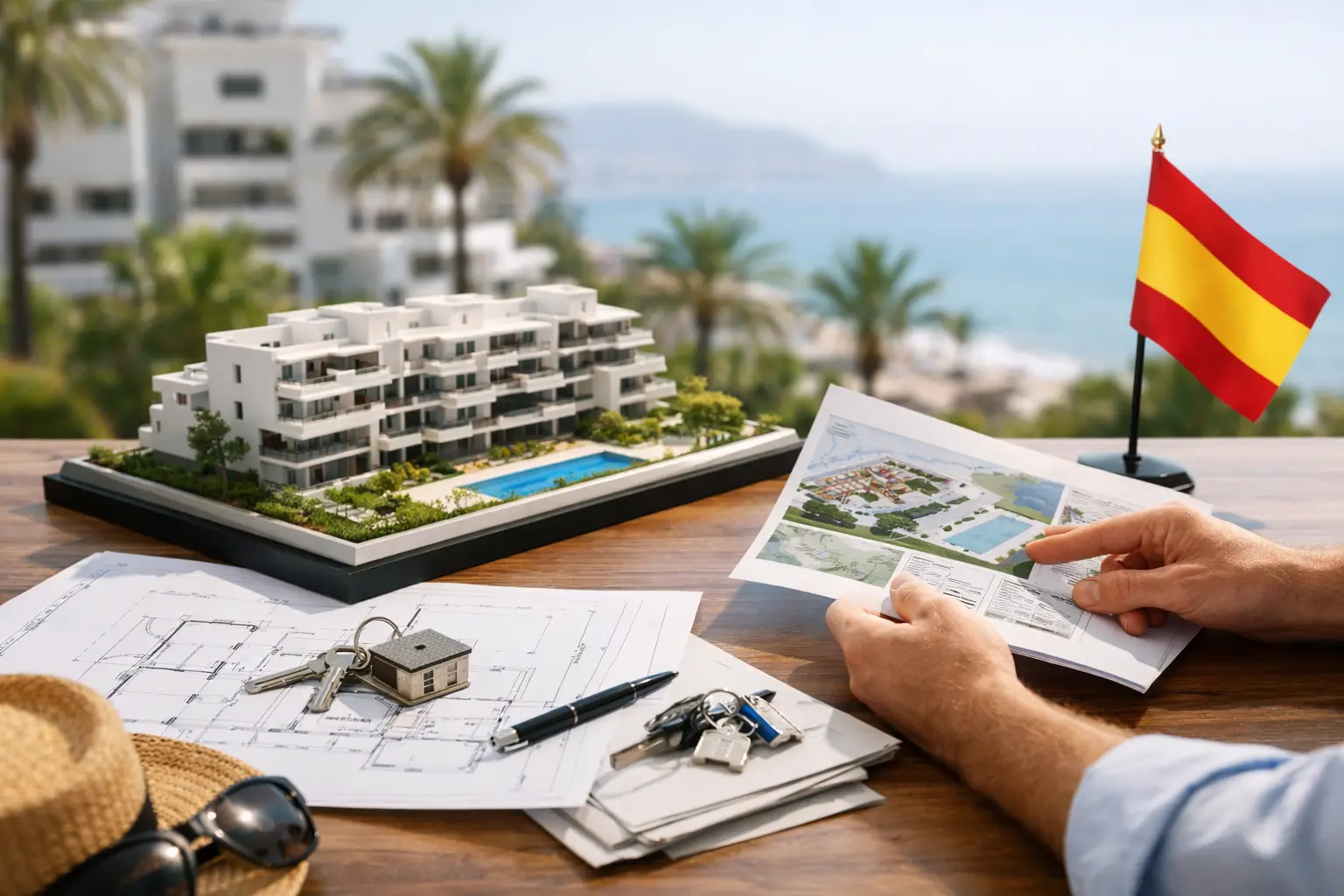
A glossy brochure and a show home can make a new development in Spain feel like an easy decision. But buying off plan property Spain is not the same as buying a completed home. You are committing to a property that may still be on paper, paying in stages, and relying on the developer, the contract terms and the legal process to protect your position.
For many international buyers, that can still be the right route. Off plan homes often give you access to modern design, better energy efficiency, lower maintenance and the chance to secure a property before prices rise during construction. The attraction is clear, especially in sought-after coastal areas where quality new stock can be limited. The key is to approach it with the same care you would give to any major investment, and in some cases even more.
Why buying off plan property Spain appeals to buyers
The main advantage is choice. Buying early in a development often means a better selection of orientation, layout, floor level or plot position. If sea views, privacy or terrace space matter to you, timing can make a real difference.
Price is another reason buyers consider off plan opportunities. In some projects, early-phase pricing is more favourable than the prices achieved once construction progresses or the development nears completion. That does not mean every off plan purchase is automatically a bargain. It depends on location, demand, build quality and how the asking price compares with similar completed homes nearby.
There is also the lifestyle element. New builds usually reflect what many overseas buyers are actually looking for today – open-plan living, strong insulation, efficient air conditioning, lift access, underground parking, communal facilities and less immediate renovation work. If you want a property ready for holidays, relocation or rental use without a long refurbishment process, a well-chosen off plan home can be appealing.
The trade-off: more upside, more reliance on process
Off plan buying can work very well, but it asks you to accept a different type of risk. With a resale property, you can inspect the finished home, assess the area as it is today and complete relatively quickly. With an off plan purchase, part of your decision is based on plans, specifications, computer images and promises about delivery.
That is why due diligence matters so much. You are not only buying a property. You are also assessing the developer’s credibility, the legal status of the project, the payment structure and the wording of the private purchase contract.
A good opportunity is not defined by the launch price alone. It is defined by how secure the project is and whether the finished property is likely to match your needs and expectations.
What to check before reserving
The first point is the developer. Experience, track record and financial strength all matter. A developer with a proven history of delivering quality projects on time is generally a safer proposition than one with limited or unclear background.
The second point is planning and legal status. Before paying a reservation fee, you should have independent legal advice confirming that the development has the correct permissions and that the land and project documentation are in order. This includes checking the building licence, the legal identity of the selling entity and whether the contract reflects what is being marketed.
Bank guarantees or insurance for stage payments are also essential. In Spain, amounts paid on account for an off plan property should be protected in line with the legal framework. This is one of the most important safeguards in the process. If a project is delayed significantly or not completed, that protection may be critical.
You should also review the specification carefully. Marketing images can create an impression that is broader than the written specification. Materials, appliances, landscaping, storage, parking, communal areas and finishes should be set out clearly. If something matters to you, ask for it in writing.
Buying off plan property in Spain: the contract stage
Once you move beyond reservation, the private purchase contract becomes the central document. This is where many buyers need the most guidance because the detail matters.
The contract should identify the property precisely, state the total price, set out the payment schedule and include a clear estimated completion date. It should also explain what happens if there are delays, how changes to the project are handled and under what conditions the buyer or developer may withdraw.
Some flexibility in delivery dates is common in new build projects. Construction timetables can shift for valid reasons. The issue is not whether there is any flexibility, but whether the wording is fair and whether there are clear remedies if delays go beyond what is reasonable.
It is also worth checking whether VAT, stamp duty, legal fees, notary fees and registration costs are presented transparently. Buyers sometimes focus on the purchase price and underestimate the full acquisition cost. Clarity at this stage prevents unpleasant surprises later.
Payment schedules and budgeting realistically
Off plan purchases usually involve staged payments. A typical structure may include a reservation fee, a deposit on signing the private contract and one or more instalments during construction, followed by the balance on completion. The exact timetable varies by developer and project.
From a budgeting perspective, staged payments can be helpful because they spread the financial commitment over time. But they also create exposure. You need to be comfortable with the timeline, your currency position if funds are held outside the eurozone, and any mortgage arrangements if financing will be part of the purchase.
Mortgage timing can be more complex with off plan property than with resale. Lending terms may change between reservation and completion, and the valuation at completion will influence the final finance position. Buyers who need borrowing should review affordability early and avoid assuming that future lending conditions will remain unchanged.
Location matters more than the launch brochure
A polished sales suite can make almost any development look attractive. The more useful question is how the location performs in real life. Is the property walking distance to the amenities you care about? Does the area work year-round or mainly in high season? Is there future development nearby that could improve value or affect privacy and views?
In Costa Blanca markets such as Calpe, Altea, Moraira and Javea, off plan opportunities can be especially appealing because land supply is finite in the best positions. That said, not every new development in a premium area is automatically a premium investment. Orientation, road access, topography, community design and service charges all influence long-term satisfaction and resale appeal.
For investors, rental demand should be assessed with the same realism. A new build with strong amenities may perform well, but returns depend on licence position, seasonality, competition and running costs, not just headline demand for holiday accommodation.
Snagging, completion and aftercare
Completion is not the end of the process. Before signing at the notary, the property should be inspected carefully. Minor issues are common in new homes, even in very good developments. A snagging inspection helps identify defects or unfinished items so they can be documented and addressed.
At completion, you will also want confirmation that the relevant certificates and utility connections are in place or progressing correctly, depending on the project. Your lawyer should coordinate the legal completion, but practical follow-up matters too. This includes community setup, property management and understanding any warranties that apply to the build.
For overseas buyers, aftercare is often underestimated. If you are not living in Spain full time, support with key handover, snagging follow-up, furnishing, utilities and ongoing management can make the purchase feel far more secure.
When off plan is a strong option and when it may not be
Off plan can be an excellent route if you want a modern home, are comfortable waiting for completion, and are buying in a project with solid legal and commercial foundations. It can also suit buyers who want time to plan relocation or spread payments during construction.
It may be less suitable if you need immediate use of the property, are uncomfortable with uncertainty around timing, or prefer to judge a home only once it is fully finished. Some buyers simply sleep better when they can walk through the exact property they are purchasing. That preference is entirely reasonable.
The right decision depends on your priorities. If you are buying mainly for lifestyle, the best option is the one that fits how you want to live in Spain. If you are buying mainly for investment, the numbers, exit potential and developer quality need to stand up to close scrutiny.
Buying off plan property Spain can be a smart move, provided the excitement of a new home never replaces proper checks. A well-bought off plan property should feel reassuring on paper long before you collect the keys, and that is usually the clearest sign you are buying for the right reasons.


Join The Discussion